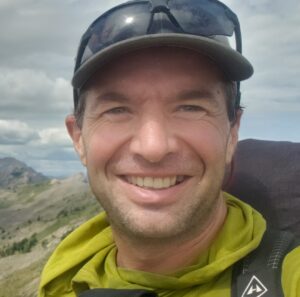
An interview with Montana Conservation Corps Director of Western Wildlands, Steve Hodgdon
There’s a common thread to many undergraduate experiences at the University of Montana. After spending semesters enjoying powder days at Snowbowl, summer floats on the Clark Fork and hiking the surrounding mountain ranges, most people don’t want to live anywhere else in the world.
For Steve Hodgdon, Montana Conservation Corps (MCC) Regional Director of Western Wildlands, all it took was a semester, and he was hooked.
“I can remember that first semester staring out the window in September when the snow flew, and I could see Snowbowl from the Botany Building at UM [University of Montana]. I remember sitting there looking at the snow and being like, ‘I wonder if I should be in school right now,’” Hodgdon recalled.
While dabbling in odd jobs between semesters around town, Hodgdon came across an ad in the Missoula Independent looking for summer trail crew members.
“I was like, that sounds like exactly what I want to be doing. I ended up doing that for a year, and then came back as a crew leader, which is kind of our cycle here. You come on as a crew member, and then a lot of people come back as crew leaders. I spent about 10 years working for the Forest Service, doing seasonal wilderness trail work in the Bob Marshall and then Selway Bitterroot. I got to live that out, and now I’m back and have been in this position for five years. Coming full circle is pretty cool,” he remarked.
Stewards of the Land
Public lands are integral to MCC’s core mission, providing an environment for employees to grow and build a lifetime career in land stewardship.
“For MCC, public land is really where our crews work. That’s everything from Forest Service, National Park Service, Bureau of Land Management and state lands, both in Montana and in surrounding states, and then county and city lands. It’s the training grounds for our crews and the young adults that really come here to serve their communities and challenge themselves,” Hodgdon explained.
“Public lands are where we do the work that fulfills our mission: inspiring young people through hands-on conservation service to be leaders, stewards of the land and engaged citizens who improve their communities. It’s where our people go to build their skills, to challenge themselves, to build resilience and prepare themselves to take on challenges in the real world. It doesn’t get any easier, and it’s where they have opportunities to work with a team and learn how to work with a team, and to rely on others and be resourceful,” added Hodgdon.
What makes MCC so enriching for staff and crew leaders? Hodgdon says it’s a combination of time spent in nature and working with people from different backgrounds and experiences.
“You’re out there in the woods, and you don’t have anyone else to turn to but the people around you. If you’re having a good day, you can support someone who’s not having a good day, and vice versa. There’s always going to be that reciprocity there. Learning to work with a number of people who you may not see eye to eye with, you may not be best friends. It’s a lot of people’s first opportunity to do that in a place where you’re not going to get away from them at the end of the day. You really have to build that ability to find common ground,” Hodgdon noted.
While on-the-job experiences provide valuable training and growth for staff, MCC is invested in helping graduates continue to make a difference in the world after their program is complete, and the organization offers education stipends that members can spend on anything from paying off student loans to taking a class. Whether members are interested in attending college or taking a welding or EMT class, MCC provides funding for graduates to pursue their educational goals.
Behind the Scenes Impact
If you are out recreating on trails in Montana from May 20 through October 15, odds are you’ve run into an MCC trail crew, and Hodgdon says that trail work has been MCC’s “bread and butter” from the start, which includes trail clearing, trail building, general trail maintenance, deferred maintenance and restoration-style activities, like removing invasive weeds, spraying and pulling.
But—their work doesn’t stop there.
“We’re doing a ton of wildfire resilience safety work, which is basically fuel thinning, assisting agencies with building fuel breaks for prescribed burns. Most of our crews aren’t going to work on the burn themselves, but they’ll work on digging and clearing the line,” Hodgdon explained.
Stream restoration work also takes up a large chunk of MCC’s efforts, with a heightened focus on
low-tech, process-based restoration, which is a fancy way of saying, “beaver dam construction.” By backing up streams like beavers have historically done, MCC creates slow water pools that recharge groundwater and provide cold flows in the upper reaches of rivers.
Underscoring the Value of Land Management Agencies
Land management agencies and their staff are critical to MCC’s success and are often where members continue their careers after program completion.
“The people who work for the [public] agencies really provide guidance and technical knowledge on the projects, and they also inspire and motivate our crews. You can’t undervalue that they meet our crews in the field, show them what needs to be done and often work side by side with them. That really helps them achieve the agency’s mission and objective, as well as some of that career development for our folks,” Hodgdon emphasized.
As outdoor recreation continues to grow in popularity, Hodgdon says that more people are participating in various outdoor activities, requiring more resources to support the demand.
“It’s no longer just hiking and horseback riding. It’s rafting, kayaking, paragliding, you know, all the things that people want to do on public land. I think that’s great for people’s health and knowledge of the place. But it also sets up more challenges.”
With more access comes more responsibility, and Hodgdon emphasizes the importance of public lands workers now more than ever.
Epic Adventure in Every Direction
When asked what makes Montana’s public lands unique, Hodgdon described the variety of experiences found in Montana for all types of outdoor enthusiasts, whether you’re a mountain biker, Nordic skier, backcountry aficionado, hunter, angler, whitewater chaser or something in between.
“From the badlands and Missouri River Breaks of Eastern Montana to alpine peaks of Glacier National Park and the Bitterroot, the Bob Marshall, the Beartooth Mountains, there’s just so much of it and so easily accessed. It really provides an amazing place for so many different people to go. Whether folks are coming from out of state as tourists, or those of us who live here, there are amazing health benefits to recreating on public land. All the ecological benefits are incredible. I was picking huckleberries at Snowbowl last night just after work,” added Hodgdon.
Earning It
Picking one favorite public lands moment for someone who has spent most of their days outside is not an easy feat, but Hodgdon shared that he always goes back to one memorable day working with the Forest Service in the Bob Marshall Wilderness.
“I did this really long day. I think it was 17 hours from start to finish, which was around 15 miles. It was mainly on the Holbrook Trail, which had some really big trees to cut, and we got caught in this violent thunderstorm. We had mules with us, so we had to spread out. That memory has always stuck in my mind. You drag your butt into camp at the end of the day, totally fried, but totally stoked and satisfied. I remember eating a Clif Bar for dinner and just had an incredible time. The memory of trees snapping around us, the wind howling, and building that team, the camaraderie around the two other folks that I was with, having that really challenging experience is something that I’m always brought back to,” Hodgdon remembered.
Final Descent
When asked what the average recreationist should know about public lands workers, Hodgdon kept it simple.
“It’s important for folks to know that — by and large — folks are working really hard to balance a lot of different people’s needs. If you see someone out on the trail working or out on public land, whatever they’re doing, say thank you. Thank yous go a long way, because a lot of times you can work out there and not see anyone. Encouraging folks to say thank you to public land workers, whether they’re the Montana Conservation Corps or an agency staff member or a volunteer group from any number of the amazing volunteer organizations that are around here that support public land, just saying thank you goes a long way. And get involved,” encouraged Hodgdon.